
How to Power Pump
Power pumping is a technique used by breastfeeding mothers to increase their milk supply. It involves pumping for short periods of time at frequent intervals to stimulate milk production. Here you’ll learn everything you need to know about how to power pump effectively.

Power pumping is designed to mimic cluster feeding for breastfed babies and ‘trick’ your body into producing more milk. It is especially useful for mothers who are struggling to produce enough milk for their baby’s needs or for those who want to build up a stash of breast milk for future use. Thankfully, this technique is easy to implement, but you will need a good quality breast pump, like the Spectra S1, as well as a dedicated time for pumping.
Key Takeaways
- Power pumping is designed to mimic cluster feeding and increase your milk supply.
- The ideal time to power pump is in the morning when milk production is at its highest, however you can power pump at any time of the day.
- Your power pumping session replaces one regular pumping session.
- Results are not instant. With consistent power pumping, mothers can see an increase in their milk supply within a few days to a week.
What is Power Pumping?
Power pumping is a technique used by nursing mothers to increase milk supply. It involves replacing a regular pumping session with a 1 hour long pumping session. During the power pumping session you will pump for short periods of time with short breaks in between, mimicking the cluster feeding pattern of a baby during a growth spurt. The goal of power pumping is to stimulate the breasts to produce more milk by increasing the frequency of milk removal.
Power pumping is typically done for a period of one hour a day, for several days in a row. This technique should be used only when a mother is experiencing a temporary drop in milk supply, such as during a growth spurt or after an illness.
Benefits of Power Pumping
I think the obvious benefit of power pumping is to increase your milk supply, after all that is what it is designed to do. It can also be a helpful tool for breastfeeding mothers who are looking to maintain or establish their milk supply, as well as for those who exclusively pump breast milk.
Here’s my full list of reasons why you may want to power pump:
- Increase Low Milk Supply: Mothers who are struggling with low milk supply may turn to power pumping as a method to increase their milk production and ensure an adequate milk supply for their baby’s needs.
- Establish or Reestablish Milk Supply: For mothers who have experienced a decrease in milk production or are trying to establish a milk supply after a period of low milk production, power pumping can help jump-start or reestablish lactation.
- Exclusive Pumping: Some mothers exclusively pump breast milk for various reasons, such as difficulties with latching or returning to work. Power pumping can be particularly beneficial for exclusive pumpers by increasing their pumping output and maintaining their milk supply over time.
- Build a Freezer Stash: Power pumping sessions can help mothers build up a freezer stash of breast milk, which can be useful for times when they are away from their baby, returning to work, or experiencing fluctuations in milk supply.
- Increase Pumping Efficiency: Power pumping can help mothers improve their pumping efficiency by encouraging a more robust let-down reflex and ensuring thorough emptying of the breasts during each pumping session.
- Maintain Milk Supply: Mothers who are separated from their baby for extended periods, such as when returning to work or during temporary separations, may use power pumping to maintain their milk supply and prevent a decrease in milk production.
- Boost Prolactin Levels: Power pumping sessions can stimulate the release of prolactin, the hormone responsible for milk production. By boosting prolactin levels, power pumping can support sustained milk production over time.
Before you start power pumping, I highly recommend you consult with a lactation consultant or healthcare provider to ensure it’s appropriate for individual circumstances.
Preparing for Power Pumping
Equipment Needed
Before starting a power pumping session, it’s important to have the right equipment on hand. Here are the items you’ll need:
- Breast pump: A double electric breast pump is recommended for power pumping. It allows you to pump both breasts at the same time and has adjustable suction levels. If you don’t have a pump yet, check out my guide on how to choose a breast pump!
- Pumping bra: A hands-free pumping bra is essential for power pumping. It allows you to pump both breasts simultaneously while keeping your hands free.
- Timer: A timer will help you keep track of your pumping sessions and breaks.
- Water bottle: Staying hydrated is important during power pumping, so make sure to have a water bottle nearby.
Set Aside at least 1 Hour for Power Pumping
You will need to set aside at least an hour of uninterrupted time for your power pumping session. So, make sure you factor this into you planning.
Setting Up Your Space
Creating a comfortable and relaxing environment can help make power pumping more effective. Here are some tips for setting up your space:
- Find a quiet and private location: Choose a spot where you won’t be disturbed and can relax.
- Get comfortable: Use pillows or a nursing pillow to support your back and arms.
- Have entertainment: Bring a book, watch a show, or listen to music to help pass the time.
- Stay warm: Keep a blanket nearby to stay warm during the pumping session.
By having the right equipment and setting up a comfortable space, you can make power pumping sessions more effective and enjoyable.
How To Power Pump
It is recommended to power pump once a day, preferably in the morning when milk production is typically highest. However, you can choose any time of the day. What is important is that you pick a time that works for you and stick to it consistently.
As I mentioned earlier, you will need to power pump for at least 1 hour so make sure you factor this in when choosing the best time to power pump for you.
It is important to note that power pumping should not be done too frequently. While it can be effective in increasing milk production, overdoing it can lead to sore nipples and decreased milk supply. It is recommended to limit power pumping to once a day, and only for a few days in a row before taking a break.
Power Pumping Schedule
A power pumping session typically looks like:
Power Pumping with a Double Electric Pump
- Pump for 20 minutes
- Rest for 10 minutes
- Pump for 10 minutes
- Rest for 10 minutes
- Pump for 10 minutes
This pattern mimics the feeding patterns of a newborn and helps to stimulate milk production.
Alternative Power Pumping Schedule
- Pump for 12 minutes
- Rest for 8 minutes
- Pump for 12 minutes
- Rest for 8 minutes
- Pump for 12 minutes
And whilst I recommend you use a double electric pump for your power pumping, if you only have a single electric pump, you can still power pump using the following schuedule:
Power Pumping with a Single Electric Pump
- Pump for 10 minutes on right breast
- Pump for 10 minutes on left breast
- Pump for 10 minutes on right breast
- Pump for 10 minutes on left breast
- Pump for 10 minutes on right breast
- Pump for 10 minutes on left breast
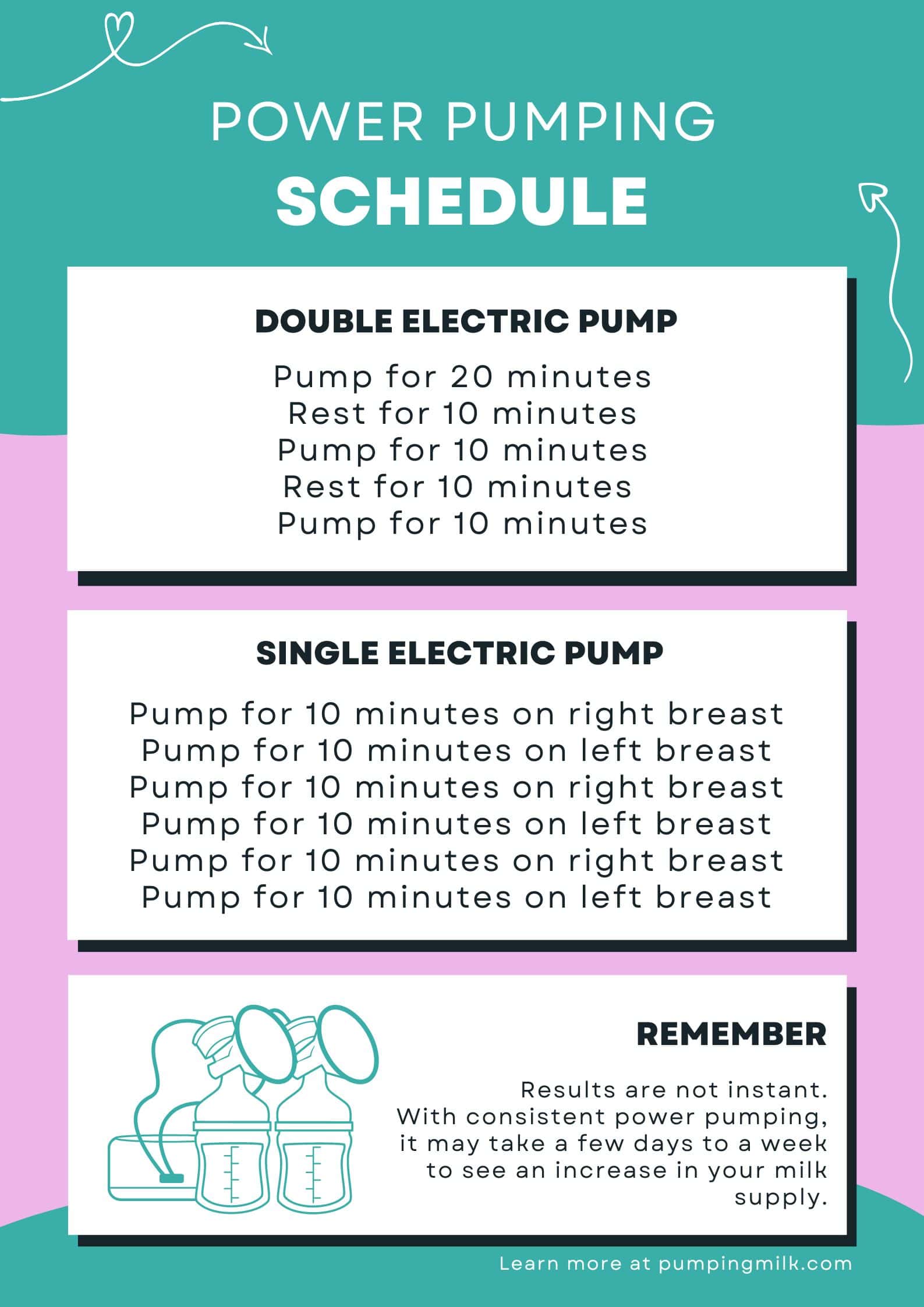
Photo credit: Pumping Milk
Final Thoughts on Power Pumping
Power pumping is a valuable technique for breastfeeding mothers seeking to increase their milk supply. By mimicking the cluster feeding pattern of babies, power pumping stimulates the breasts to produce more milk. This method can be particularly helpful for mothers experiencing low milk supply, those looking to build a freezer stash, or those exclusively pumping.
When establishing a power pumping schedule, consistency is key. While it’s recommended to power pump once a day for at least an hour, it’s essential not to overdo it, as this can lead to sore nipples and decreased milk supply. Following a structured pumping schedule, such as the recommended patterns, can help stimulate milk production effectively.


