
Ultimate Guide to Wearable Breast Pumps
Wearable breast pumps have changed the way many moms approach pumping. Instead of being tied to a wall outlet or managing long tubing and external motors, these all-in-bra pumps are designed to offer more flexibility, discretion, and freedom throughout your day.
But are wearable pumps strong enough to maintain milk supply? Can you exclusively pump with one? And how do they really compare to traditional electric breast pumps?
In this Ultimate Wearable Breast Pump Guide, I’ll walk you through how wearable pumps work, their pros and cons, who they’re best suited for, and what to look for before buying. After testing dozens of wearable and portable pumps through Pumping Milk, I’ve seen firsthand how much performance can vary depending on suction design, flange fit, and daily routine.
This guide will help you understand the full picture so you can confidently decide whether a wearable breast pump fits your body, your supply, and your lifestyle.
If you’re looking for a side-by-side comparison of the top models currently available, you can also see my Best Wearable Breast Pumps guide. But first, let’s break down what you really need to know about wearable pumps.
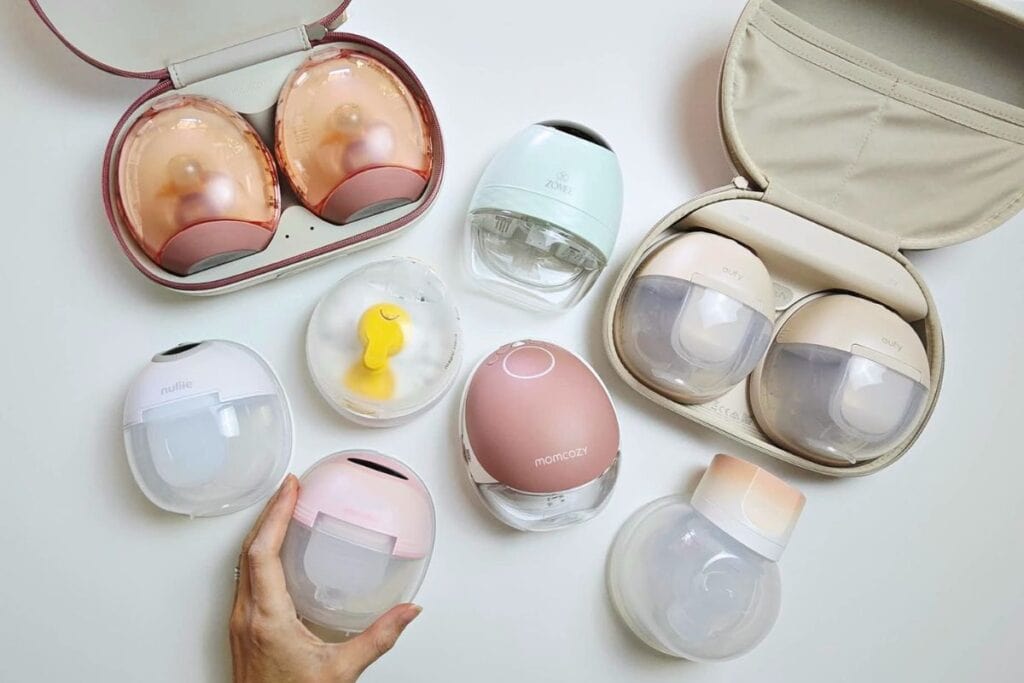
What Is a Wearable Breast Pump?
A wearable breast pump is a compact, hands-free pump designed to sit entirely inside your bra. Unlike traditional electric pumps that use external motors, tubing, and separate bottles, wearable pumps combine the motor and milk collection cup into one self-contained unit.
Because everything fits inside your bra, you can move around while pumping — whether that’s working, driving, or caring for your baby. There are no cords to a wall outlet and no bottles hanging outside your clothing.
Most wearable pumps are battery-powered and use a closed system to protect milk from backflow. They typically include stimulation and expression modes, along with adjustable suction levels.
It’s also important to understand that not all portable pumps are true wearables. Some compact pumps still use tubing and external bottles. A true wearable pump sits fully in-bra with no visible components.
How Do Wearable Breast Pumps Work?
Wearable breast pumps create suction that gently draws the nipple into the flange tunnel, stimulating milk release and then extracting milk into a sealed collection cup.
Like traditional electric pumps, most wearables use two phases: a faster, lighter stimulation mode to trigger letdown, followed by a slower, deeper expression mode to remove milk. Suction levels are typically adjustable so you can fine-tune comfort and output.
The main difference is in the design. Instead of tubing connecting to an external motor, wearable pumps house a compact, battery-powered motor directly on top of the collection cup. This allows everything to sit inside your bra while still generating enough vacuum pressure to remove milk effectively.
Because the motor is smaller and cordless, suction can feel slightly different from a full-size plug-in pump. Ultimately, performance depends on how suction design, rhythm, and flange fit work with your body.
Are Wearable Breast Pumps Strong Enough?
For many moms, yes.
Modern wearable breast pumps often reach suction levels similar to traditional electric pumps, typically around 250 to 300 mmHg. For moms with an established milk supply, this is usually enough to maintain output and empty comfortably.
That said, maximum suction isn’t the only factor that determines performance. The way a pump delivers suction — including rhythm, consistency, and proper flange fit (see my full flange sizing guide) — often matters more than the number on paper.
If you are exclusively pumping, building supply, or managing low output, alternating with a traditional electric pump may provide more consistent results.
Wearables can absolutely be strong enough — but the real difference comes down to how well the pump design works with your body.
For a deeper breakdown of suction comparisons and performance differences, see my full guide on whether wearable breast pumps are strong enough.

Wearable vs Traditional Breast Pumps
The biggest difference between wearable and traditional breast pumps comes down to design and power delivery.
Traditional electric pumps typically use a separate motor with tubing and external bottles. Because they plug into a wall outlet or use larger rechargeable motors, they often provide very consistent suction and are commonly used as primary pumps, especially in the early postpartum period.
Wearable pumps, on the other hand, house the motor directly inside the bra. They offer significantly more freedom and discretion, but the compact design can create a slightly different suction feel.
For many moms, modern wearables are strong enough for daily use. However, some find that traditional pumps provide more consistent emptying, particularly when building or protecting milk supply.
Choosing between the two often depends less on “which is better” and more on how your body responds to suction and how much flexibility you need in your routine.
For a deeper comparison of performance, comfort, and real-world use, see my full guide on wearable vs traditional breast pumps.
Pros and Cons of Wearable Breast Pumps
Like any pump, wearable breast pumps come with both advantages and limitations. Understanding both sides helps you decide whether convenience outweighs potential trade-offs for your routine.
Pros
- Hands-free flexibility – Because everything sits inside your bra, you can move around during sessions instead of being anchored to a wall outlet.
- Discreet design – No external bottles or tubing makes pumping at work or in shared spaces more comfortable for many moms.
- Portable and cordless – Most wearables are rechargeable, making them easy to use while commuting, traveling, or multitasking at home.
- Improved technology – Modern wearables now offer stronger suction, adjustable levels, and in some cases app tracking or additional comfort features.
Cons
- May not empty as efficiently for everyone – Some moms respond better to the consistent power of a traditional plug-in pump.
- Fit matters more – Because the motor sits directly on the breast, flange size and bra support become even more important.
- Battery limits – You’ll need to stay mindful of charge levels, especially if pumping multiple times a day.
- Often higher cost -Premium wearable pumps can cost more than basic traditional electric models.
For many moms, the freedom is worth it. For others, combining a wearable with a traditional electric pump offers the best balance of convenience and performance.
Can You Exclusively Pump With a Wearable?
Yes — many moms do exclusively pump with a wearable breast pump. But whether it works well for you depends on your milk supply, response to suction, and how often you pump.
If your supply is already established and you respond well to wearable suction, it’s possible to use one as your primary pump. Modern wearables can offer strong vacuum levels and adjustable rhythms that are sufficient for regular daily sessions.
However, if you are building supply in the early weeks postpartum, managing low output, or exclusively pumping long-term, some moms find that incorporating a traditional electric pump helps maintain more consistent emptying. Even using a plug-in pump once or twice a day can support supply stability.
Exclusive pumping with a wearable isn’t impossible — but it requires good flange fit, consistent pumping frequency, and a pump your body responds well to.
If you want a deeper breakdown of when it works best (and when it doesn’t), see my full guide on exclusively pumping with a wearable.
Who Are Wearable Breast Pumps Best For?
Wearable breast pumps are ideal for moms who value flexibility and need to pump while continuing with daily responsibilities.
They’re often a great fit for working moms who pump during meetings or commutes, stay-at-home moms juggling multiple children, and anyone who finds sitting next to a traditional pump restrictive or stressful. If convenience, discretion, and mobility matter most in your routine, a wearable can make pumping feel significantly more manageable.
They also work well for moms with established supply who respond comfortably to in-bra suction and prefer a cordless setup for travel or on-the-go sessions.
That said, the “best” pump always depends on how your body responds. Wearables shine when convenience is the priority — but performance and fit should still guide your decision.
Who Should Not Rely on a Wearable Alone?
While wearable breast pumps work well for many moms, they may not be the best sole option in certain situations.
If you are in the early weeks postpartum and actively building supply, a traditional electric pump can sometimes provide stronger, more consistent stimulation. Moms working through low milk supply, frequent clogged ducts, or difficulty achieving full emptying may also benefit from using a plug-in pump at least once or twice per day.
Wearables can still play a role in these routines — especially for convenience — but relying on them exclusively may not offer the same consistency for every body.
In some cases, combining a wearable for daytime flexibility with a stronger primary pump at home creates the best balance between freedom and supply support.

What to Look for in a Wearable Breast Pump
Not all wearable pumps perform the same. Before choosing one, focus on these key factors:
- Suction design and adjustability – Maximum suction matters, but rhythm and consistency matter just as much. Look for adjustable levels that allow you to fine-tune comfort and output.
- Flange fit – Even a few millimeters can affect comfort and milk removal. Proper sizing is essential for both output and nipple health.
- Battery life – If you pump multiple times per day, choose a model that offers enough sessions per charge to support your routine.
- Noise level – If you’ll be pumping at work or in shared spaces, quieter operation can make a big difference in confidence and discretion.
- Ease of cleaning and replacement parts – Fewer parts and easy access to valves and membranes will make daily use far simpler long term.
Choosing a wearable pump isn’t just about brand — it’s about how well the design matches your body and lifestyle.
Common Mistakes When Choosing a Wearable Pump
Many frustrations with wearable breast pumps come down to setup rather than the pump itself.
- Choosing based on popularity alone – A pump that works beautifully for one mom may not work the same for another. Body response and flange fit matter more than brand trends.
- Ignoring flange sizing – Incorrect sizing is one of the biggest reasons for low output, discomfort, or leaking. Even a small sizing difference can impact performance significantly.
- Relying on a wearable too early – In the first few weeks postpartum, milk supply is still being established. Some moms find better long-term results by using a traditional electric pump during this phase.
- Expecting it to feel identical to a plug-in pump – Wearables often deliver suction differently. Understanding that the sensation may feel lighter or more compact can help set realistic expectations.
Avoiding these common mistakes can make the difference between a wearable that feels frustrating and one that fits seamlessly into your routine.
Are Wearable Breast Pumps Worth It?
For many moms, absolutely.
The biggest benefit of a wearable breast pump is freedom. Being able to pump without being tied to a wall outlet can reduce stress, make multitasking easier, and help you stay consistent with sessions — especially during busy workdays or while caring for other children.
That said, “worth it” depends on your priorities. If maximum suction power is your only goal, a traditional electric pump may still feel stronger. But if flexibility, discretion, and mobility matter just as much as output, a wearable can be a valuable addition to your pumping setup.
Many moms find the best balance comes from using a wearable during the day and a traditional pump at home.
Bottom Line
Wearable breast pumps offer unmatched convenience and flexibility, and modern designs are powerful enough for many moms. However, performance depends on fit, suction design, and how your body responds.
The right choice isn’t about trends — it’s about finding a setup that supports both your milk supply and your daily routine.
Final Thoughts on Choosing a Wearable Breast Pump
Wearable breast pumps have made pumping more flexible and discreet than ever. For many moms, the ability to move freely during sessions improves both consistency and confidence.
But no pump works the same for everyone.
Suction strength, flange fit, milk supply, and daily routine all play a role in how well a wearable performs. For some, a wearable becomes their primary pump. For others, it works best alongside a traditional electric pump.
The key is understanding how wearable pumps function, what they do well, and where they may fall short — so you can choose confidently instead of relying on trends or marketing claims.
If you’re ready to compare top-performing models side-by-side, see my Best Wearable Breast Pumps guide to find the right fit for your routine and budget.
Related Guides You May Find Helpful
If you’re exploring wearable breast pumps further, these guides will help you go deeper:
- Best Wearable Breast Pumps – Compare the top-performing wearable models side-by-side, including suction strength, comfort, noise level, and value.
- Breast Pump Flange Sizing Guide – Finding the right flange size can dramatically improve comfort and milk output. This step-by-step guide helps you measure correctly and choose the right fit.


