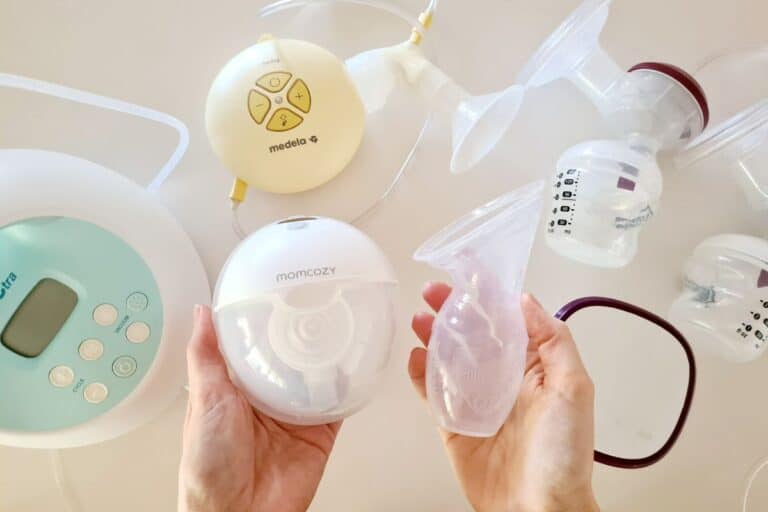
How Often Should You Replace Breast Pump Parts?
Breast pumps are essential tools for many breastfeeding moms, but like any tool, they require regular maintenance to perform at their best.
One of the most important aspects of pump care is replacing parts at the right time. Over time, pump parts wear down, which can affect suction, hygiene, and even milk output.
But how often should you replace breast pump parts? Let’s take a look!

Photo credit: Pumping Milk
Editor’s note: Pumping Milk is reader-supported, meaning, at no cost to you, I may earn a commission if you buy after clicking an affiliate link. Learn More.
Why Replacing Pump Parts Is Important
Maintaining your breast pump ensures both efficiency and safety. Why? Because pump parts wear out, which can negatively affect suction and hygiene.
Here’s why replacing pump parts regularly is essential:
- Maintains Suction Efficiency: Worn parts reduce suction, making it harder to express milk and potentially lowering your milk supply.
- Prevents Bacterial Growth: Cracked or discolored parts can trap milk residue, creating a breeding ground for bacteria, which could contaminate your milk.
- Protects Baby’s Health: Using compromised parts increases the risk of exposing your baby to harmful germs, leading to infections.
- Prevents Milk Leaks and Backflow: Damaged parts can cause leaks or backflow, which might damage the pump motor and further reduce efficiency.
- Ensures Pump Longevity: Regularly replacing parts helps extend the life of your pump and keeps it performing at its best.
I get that it feels like an unnecessary additional cost, but routine part replacement is a crucial step to ensure your pump works effectively and your baby stays healthy.
Signs That It’s Time to Replace Your Pump Parts
If you’re pumping milk, no doubt you want it to be as efficient and hygienic as it can be. Thankfully there are some common signs to watch for that can indicate that your pump parts need replacing.
Here are common indicators:
- Decreased Suction: If your pump isn’t pulling as effectively, worn valves or membranes may be the cause.
- Milk Leaks or Backflow: Leaking milk or backflow into tubing can signal damaged or improperly sealed parts.
- Cracks or Discoloration: Cracked, discolored, or warped plastic parts can harbor bacteria and reduce effectiveness.
- Noisy Pumping: Unusual sounds during pumping may mean a part isn’t functioning properly, affecting suction.
- Uncomfortable Pumping: If your flanges or inserts feel uncomfortable or don’t fit as well as they used to, they may need replacement.
You may also want to replace your pump parts if you’ve had your pump in storage or purchased a secondhand pump.
General Timeline for How Often Should You Replace Breast Pump Parts
I know it can be helpful to have a general timeline for when breast pumps need to be replaced, but just keep in mind that these are just guidelines.
Each brand will have its own specific requirements for when parts should be replaced, which is important to factor in especially if your pump is under warranty.
How often you should replace pump parts will also depend on your usage. Someone who is exclusively pumping will need to replace the breast pump parts much sooner than someone who is only occasionally pumping.
That said, here’s a general breakdown of how often you should replace pump parts:
- Valves: These regulate airflow and suction. Replace them every 1-3 months, or if you notice a loss in suction or any tears.
- Membranes/Diaphragms: These parts create an airtight seal. They should be replaced every 2-3 months, or sooner if they appear stretched, discolored, or damaged.

Photo credit: Pumping Milk
- Flanges (Breast Shields): These connect to your breast to create suction. Replace them every 6 months, or if they become cracked, discolored, or uncomfortable.
- Flange Inserts: If you use flange inserts for a better fit, they should be replaced every 3-6 months, or when they lose their shape.
- Tubing: Tubing should be replaced every 3-6 months, or immediately if you notice cracks, condensation, or milk backflow, as this can affect suction and cleanliness.
- Connectors and Adapters: These parts can crack or lose their fit over time. Replace them every 3-6 months, or when you notice wear or difficulty assembling.
- Collection Containers: Replace every 6-12 months, or sooner if you notice cracks, discoloration, stains, or persistent odors.

Photo credit: Pumping Milk
I also highly recommend if you are using a secondhand breast pump that you replace your pump parts before you start using it.
Its a personal preference, but there are a few reasons I recommend this.
Mostly it revolves around ensuring that your pump is at its optimum performance for you when you start to use it. I think in many cases it is hard to know how someone else maintained the pump before you and when all the parts were last replaced, especially if you don’t know the person well.
Secondly, when you know exactly when the parts were last replaced you can easily keep on top of your regular maintenance schedule.
Where to Purchase Replacement Parts
The good news is, finding replacement parts for your breast pump is generally easy unless the breast pump has been discontinued by the manufacturer.
The key thing here is to note that your replacement parts are specific to your breast pump model.
Replacement parts for a Spectra S1 or S2 pump are very different to a Momcozy M5 pump.

Photo credit: Pumping Milk
Also keep in mind if you are purchasing authentic brand or dupe replacement parts. Both can be fine, but just make sure that you are checking the reviews for quality and compatibility with your breast pump.
There are some well known and trusted brands such as MayMom that specialize in breast pump parts for various brands like Medela, Spectra, and Ameda even though they are not affiliated with the brands.
Here is my Amazon list on where to get genuine replacement parts for some of the most popular breast pump brands. Just make sure you are also making sure it is compatible with your specific breast pump model.