
Lactation Pancakes
Make these fluffy lactation pancakes packed with milk-boosting ingredients like oats, flaxseed, and brewer’s yeast.
You can mix up the batter the night before and store it in the fridge for quick, easy pancakes in the morning!
If you’re a breastfeeding mom, you know how important it is to keep up your milk supply. These pancakes are a simple and delicious way to include galactagogues in your diet to support lactation naturally.
Oats, flaxseed, and brewer’s yeast work together to nourish your body while keeping you full and energized. Plus, they taste amazing!
I like to prepare the batter the night before, letting the oats soften and the flavors meld together. In the morning, all that’s left to do is cook up a warm, fluffy stack and enjoy them with my favorite toppings!

Why You’ll Love This Recipe!
- Milk-Boosting Ingredients – Oats, flaxseed, and brewer’s yeast work together to naturally support lactation.
- Make-Ahead Friendly – Prep the batter the night before for a hassle-free morning.
- Nutritious & Delicious – Packed with fiber, healthy fats, and protein to keep you energized.
- Kid-Approved – Even if you’re not breastfeeding, these pancakes are a wholesome, tasty option for the whole family.
- Customizable – Easily adapt the recipe to be gluten-free, dairy-free, or vegan to fit your dietary needs.
Why These Pancakes Help Increase Milk Supply
Lactation pancakes aren’t just tasty—they contain key ingredients known as galactagogues, which are believed to support and enhance milk production. Here’s why these ingredients work:
- Oats – A great source of iron, fiber, and slow-releasing energy, oats help keep moms full and may support lactation.
- Brewer’s Yeast – Packed with B vitamins, iron, and protein, this ingredient is commonly used to boost milk supply.
- Flaxseed – Rich in omega-3 fatty acids and phytoestrogens, flaxseed is great for overall hormonal balance and lactation support.
How To Make Lactation Pancakes (Step-by-Step Instructions)
To start, soak the oats in milk and let them sit for a while to soften. This helps create a smoother texture for the batter and ensures the oats blend well with the other ingredients.
While the oats are soaking, mix the dry ingredients in a separate bowl, including the flour, flaxseed, brewer’s yeast, sugar, baking powder, baking soda, salt, and cinnamon. Whisk everything together to ensure even distribution.
Once the oats have softened, add the eggs, melted butter, and vanilla to the bowl and stir until well combined. Gradually incorporate the dry ingredients into the wet mixture, stirring gently until everything is just combined. Be careful not to overmix, as this can affect the texture of the pancakes. Let the batter rest for a few minutes to allow the ingredients to fully hydrate.
Heat a greased pan over medium heat and pour in small amounts of batter to form pancakes.
Cook until bubbles appear on the surface, then carefully flip and cook the other side until golden brown. Adjust the heat as needed to prevent burning while ensuring the pancakes cook through.
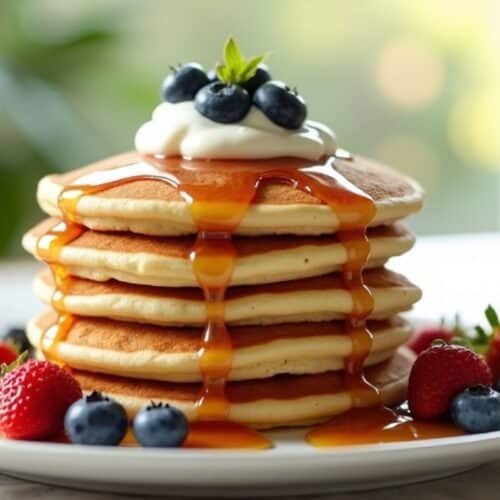
Once done, stack them up and serve warm with your favorite toppings, such as fresh fruit, yogurt, nut butter, or a drizzle of maple syrup.

Dietary Variations
These pancakes are easy to adapt for different dietary needs:
Gluten-Free Option
- Use gluten-free oats: Ensure your rolled oats are certified gluten-free.
- Swap the flour: Replace the all-purpose/whole wheat flour with a 1:1 gluten-free baking flour blend, or use an equal amount of additional oat flour (finely ground oats). If using only oat flour, add an extra 1/2 teaspoon of baking powder to help them fluff up (oat-only batter can be a bit denser).
- Oat-only batter: As an alternative, you can skip wheat flour entirely by using a blended oat batter. For example, one gluten-free pancake recipe simply blends oats, a banana, yogurt, and an egg to make a smooth batter. You can adapt this by adding the flaxseed meal and brewer’s yeast to that mixture to get the same milk-boosting benefits.
- Note: If using gluten-free flour blends, check if they contain xanthan gum (if not, a quarter teaspoon of xanthan gum or an extra flax egg can improve the texture). Letting the batter rest a few extra minutes also helps the oats and gluten-free flour hydrate for a better texture.
Vegan Option (Dairy-Free & Egg-Free)
- Flax “Eggs”: Replace the eggs with flaxseed eggs, which fits perfectly since this recipe already uses flax. For each egg, mix 1 tablespoon of ground flaxseed meal with 3 tablespoons of water, and let it sit for about 10 minutes until it gels. Use this gelled mixture in place of the eggs.
- Non-Dairy Milk/Buttermilk: Use your favorite plant-based milk (such as almond, soy, or oat milk) instead of dairy milk. To mimic buttermilk, add 1 tablespoon of vinegar or lemon juice per cup of plant milk, stir, and let it sit for 5–10 minutes – it will curdle slightly into a “buttermilk” substitute. You can also use unsweetened plant-based yogurt thinned with a little water as a buttermilk replacement.
- Butter Substitute: Swap out butter for coconut oil or a plant-based vegan butter. (This recipe already suggests coconut oil, which works well as a dairy-free fat.)
- Other Considerations: All the other ingredients – oats, brewer’s yeast, flaxseed, etc. – are naturally vegan. If adding chocolate chips, use dairy-free chocolate. These adjustments will give you a stack of fluffy, 100% vegan lactation pancakes with all the same great milk-boosting ingredients!
Optional Add-Ins and Toppings
You can customize your lactation pancakes with tasty add-ins. Fold these into the batter or sprinkle on top of each pancake before flipping. Here are some ideas:
- Fresh or frozen berries – e.g. blueberries or raspberries, for a fruity antioxidant boost.
- Sliced banana – either mixed into the batter or placed on the cooking pancake for natural sweetness.
- Chopped nuts (almonds, walnuts, pecans) – adds crunch, healthy fats, and extra protein (nuts are also considered milk-boosting foods).
- Chocolate chips – for a treat; dark chocolate chips pair nicely with the oats.
- Spices – a pinch of nutmeg or extra cinnamon can enhance flavor (you can also add a bit of lemon zest for a fresh twist, or try a dash of cocoa powder for chocolate pancakes).
- Toppings: beyond syrup, try fresh fruit slices, a spoon of fruit compote or jam, yogurt or whipped cream, or even a smear of peanut butter for extra protein.
Helpful tip: When adding fruits like blueberries to the batter, you can reserve a few to drop onto each pancake once you pour the batter on the griddle – this helps distribute them evenly and prevents the batter from turning blue.
More Lactation Recipes To Try

Lactation Pancakes
Ingredients
- 1 1/2 cups Rolled oats Old-fashioned oats; use certified gluten-free oats if needed
- 1 1/2 cups Milk or buttermilk Use dairy or plant-based milk; see variations for non-dairy “buttermilk”
- 1 cup Flour All-purpose or whole wheat; or use oat flour/ground oats for more oat flavor
- 2 tbsp Ground flaxseed
- 2 tbsp Brewer’s yeast
- 2 tbsp Sugar Or honey/maple syrup; adjust to taste
- 2 tsp Baking powder
- 1/2 tsp Baking soda Omit if using regular milk instead of buttermilk
- 1/2 tsp Salt
- 1 tsp Ground cinnamon Optional, for flavor
- 2 large Eggs At room temperature; see vegan variation for egg-free option
- 2 tbsp Melted unsalted butter Or ghee/coconut oil; use coconut oil for dairy-free
- 2 tbsp Melted coconut oil Unrefined for a light coconut flavor, or refined for no flavor
- 1 tsp Vanilla extract Optional, for flavor
Instructions
- Soak the Oats: In a large bowl, combine the rolled oats and milk (or buttermilk). Let this mixture sit for at least 30 minutes (or refrigerate overnight) to soften the oats. This step helps create a smoother, thicker batter.
- Mix Dry Ingredients: In a separate bowl, whisk together the flour, ground flaxseed, brewer’s yeast, sugar, baking powder, baking soda, salt, and cinnamon. Ensure these dry ingredients are well combined and that the flaxseed and yeast are evenly distributed.
- Add Eggs and Fat: To the soaked oat mixture, add the eggs and whisk or stir to combine. Pour in the melted butter and coconut oil, along with the vanilla extract (if using). Stir until the wet ingredients are well incorporated with the soaked oats.
- Combine Wet and Dry: Pour the dry ingredient mix into the bowl of wet ingredients. Gently stir until just combined – do not over-mix. The batter will be thick and lumpy (this is normal due to the oats and flax). Let the batter rest for about 5 minutes to allow it to thicken and hydrate.
- Add Optional Mix-Ins: If you plan to include any fruits, nuts, or other add-ins in the batter (see suggestions below), fold them in now. For example, gently stir in a handful of fresh blueberries or chopped nuts.
- Cook the Pancakes: Heat a lightly oiled or buttered griddle or non-stick skillet over medium heat. Once hot, pour or scoop about 1/4 cup of batter per pancake onto the griddle (you can use 1/3 cup for larger pancakes). Cook for 2–3 minutes, until bubbles form on the surface and the edges start to look set. Flip the pancake carefully with a spatula, and cook for another 1–2 minutes on the second side until golden brown. Adjust the heat as needed to cook through without burning.
- Serve: Stack the warm pancakes on plates. Serve with your desired toppings – popular options include a pat of butter (or nut butter), a drizzle of maple syrup or honey, fresh fruit on top, or a dollop of yogurt. Enjoy these pancakes fresh, or let them cool and freeze any extras for later (they reheat well in a toaster or microwave).


These are so easy to make and delicious! Curious, can I save the batter and use it the next day?
Thanks for the great feedback! And great question – yes that is fine to batch make and save the batter for the next day – just make sure you refrigerate it.